PEG Feeding Support for NDIS Participants: Dietitian Services in Melbourne
Written by Brian Carminati, APD
Accredited Practising Dietitian
At Mealtime Matters, we provide specialised NDIS PEG feeding dietitian support in Melbourne, helping participants manage enteral nutrition, improve tolerance, and prevent complications.
Dietetic support for PEG feeding may be funded under the NDIS. Dietitians play a key role in managing enteral nutrition, consistent with standards from Dietitians Australia and international clinical guidelines.
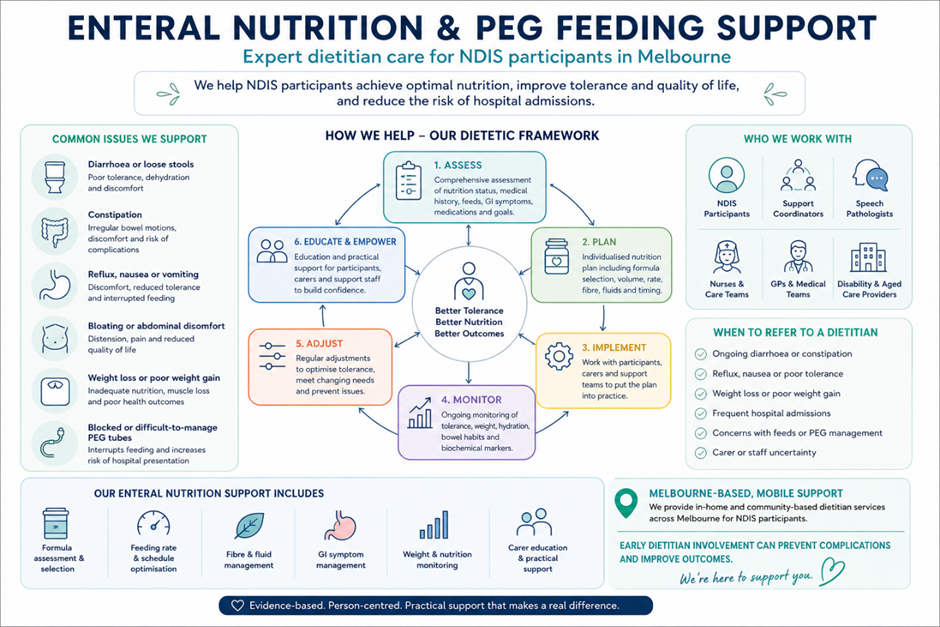
Supporting PEG Feeding at Home
Enteral nutrition (tube feeding) is often essential for individuals who cannot meet their nutrition needs orally. However, managing a PEG can be complex, especially at home. Dietitians play a crucial role in supporting NDIS participants, families, and care teams across Melbourne to ensure feeds are:
- Nutritionally adequate
- Well tolerated
- Easy to manage day-to-day
Common Problems Dietitians Help With
Many people assume tube feeding is “set and forget.” In reality, issues are common:
- Diarrhoea or loose stools
- Constipation
- Reflux, nausea, or vomiting
- Bloating or discomfort
- Weight loss despite feeding
- Blocked or difficult-to-manage PEG tubes
If these are occurring, the feeding regimen often needs adjustment.
Explore Common PEG Feeding Issues and Solutions
- Managing diarrhoea, bloating and reflux on tube feeding
- Constipation on PEG feeding
- Weight loss despite enteral nutrition
How Dietitians can Help
Dietitians provide practical, outcome-focused support:
- Adjusting feed type (including fibre content and formula selection)
- Modifying feeding rates and schedules
- Managing GI symptoms (diarrhoea, reflux, constipation)
- Optimising energy and protein intake
- Supporting carers to confidently manage feeds
- Reducing risk of hospital admission
This is not just nutrition advice – this is active clinical management of enteral feeding. Dietitians play a central role in supporting NDIS participants who are enterally fed, ensuring feeding regimens are appropriate, well tolerated, and responsive to changing clinical needs.
A comprehensive initial dietetic assessment is recommended to identify existing or potential issues, establish individualised nutrition goals, and plan regular reviews. This goes beyond simply prescribing feed volumes, focusing instead on tolerance, gastrointestinal function, and overall clinical outcomes.
At Mealtime Matters, our dietitians work as a key part of the care team – providing evidence-based adjustments, practical strategies, and ongoing support to both participants and those involved in their care.
Who Dietitians Work With
Dietitians support:
- NDIS participants
- Support coordinators
- Speech pathologists
- Nurses and GPs
- Aged care and disability providers
When to Refer to a Dietitian
Refer to a dietitian if there is:
- Ongoing diarrhoea or constipation
- Weight loss or poor weight gain
- Poor tolerance to feeds
- Frequent hospital admissions
- Concerns from carers or support staff
Get Support with PEG Feeding
At Mealtime Matters, we provide mobile and community-based dietitian services across Melbourne, supporting NDIS participants with PEG feeding and enteral nutrition. Our NDIS PEG feeding dietitian services in Melbourne focus on practical, in-home support for complex feeding needs.
If you are supporting someone with tube feeding and noticing concerns with tolerance, weight, or feeding management, early dietitian input can prevent complications and improve outcomes.
Contact us to arrange an assessment or discuss a referral
About the Author
Brian is a Melbourne-based Accredited Practising Dietitian supporting NDIS participants with PEG feeding and enteral nutrition. He works across community and residential aged care settings, managing complex nutrition needs including malnutrition, tube feeding, and chronic disease.
Brian has over 10 years of experience in nutrition, including working in physique and lifestyle transformation. This background supports a practical, outcome-focused approach to improving nutritional intake and body composition in clinical populations.
