Struggling with Tube Feeding? Managing Diarrhoea, Bloating & Reflux
Written by Brian Carminati, APD
Accredited Practising Dietitian
Tube feeding intolerance is a common issue in individuals receiving enteral nutrition through a PEG. Symptoms such as diarrhoea, bloating, and reflux are often accepted as part of feeding – These symptoms often indicate issues with the feeding regimen. Our dietitians provide PEG feeding support for NDIS participants to improve tolerance and reduce complications.
For NDIS participants living in the community, these symptoms can impact overall intake, cause discomfort, and increase the risk of hospital admission if not addressed early.
What Is Tube Feeding Intolerance?
Tube feeding intolerance refers to the body’s difficulty tolerating enteral nutrition. It often presents as gastrointestinal symptoms that interfere with feeding.
Common symptoms include:
- Diarrhoea
- Bloating or abdominal discomfort
- Reflux or regurgitation
- Nausea or vomiting
What Causes Diarrhoea, Bloating or Reflux in PEG Feeding?
There is rarely a single cause; a structured Dietitian assessment is needed. There are several reasons why someone may experience poor tolerance to tube feeding. Feed composition is a common factor: some individuals do not tolerate certain formulas well, particularly if fibre content is too low or too high for their needs. Feeding rate can also play a role, with faster rates increasing the likelihood of diarrhoea or reflux. Medications, hydration status, and underlying medical conditions can further impact how the gut responds to enteral nutrition.
1. Feeding Rate and Volume
Rapid feeding rates can overwhelm the digestive system, leading to diarrhoea or reflux.
2. Formula Composition
Different formulas vary in:
- Fibre content
- Osmolality
- Macronutrient composition (Including fat type)
Some individuals tolerate certain formulas better than others.
3. Fibre Content
Fibre plays a complex role:
- Too little → may contribute to diarrhoea
- Too much (or poorly tolerated types) → may worsen bloating
4. Medications
Many medications (e.g. antibiotics, liquid meds with sorbitol) can contribute to diarrhoea.
5. Hydration
Inadequate or excessive fluid provision can impact gut function and tolerance.
How a Dietitian Manages Tube Feeding Intolerance
A dietitian experienced in enteral nutrition can assess tolerance and adjust feeding plans. We provide enteral nutrition and tube feeding management in the community.
Management may include:
- Changing to a more suitable formula
- Adjusting feeding rate and schedule
- Modifying fibre content
- Reviewing medication interactions
- Optimising hydration
These changes are individualised and monitored over time.
When to Refer to a Dietitian
Consider referral if there is:
- Persistent diarrhoea
- Ongoing bloating or discomfort
- Reflux or vomiting during feeds
- Reduced intake due to poor tolerance
If symptoms persist despite adjustments, early dietitian input can help prevent complications and hospital admissions. You can submit an online referral for PEG feeding support here.
Support for NDIS Participants in Melbourne
We support NDIS participants across Melbourne with PEG feeding and enteral nutrition management, helping improve tolerance and reduce complications.
Explore Related PEG Feeding Topics
Explore Other Common PEG Feeding Issues and Solutions
- Constipation on PEG feeding
- Weight loss despite enteral nutrition
- Blocked PEG tubes and feeding complications
A Practical Approach to Troubleshooting Tube Feeding Intolerance
Managing tube feeding intolerance requires a structured approach. Rather than making multiple changes at once, adjustments should be made systematically to identify the underlying cause and improve tolerance safely. At Mealtime Matters, our Dietitians are clinically trained to follow best practice guidelines set out by Dietitians Australia when it comes to supporting you or your participant with identifying and solving potential issues with PEG feeds.
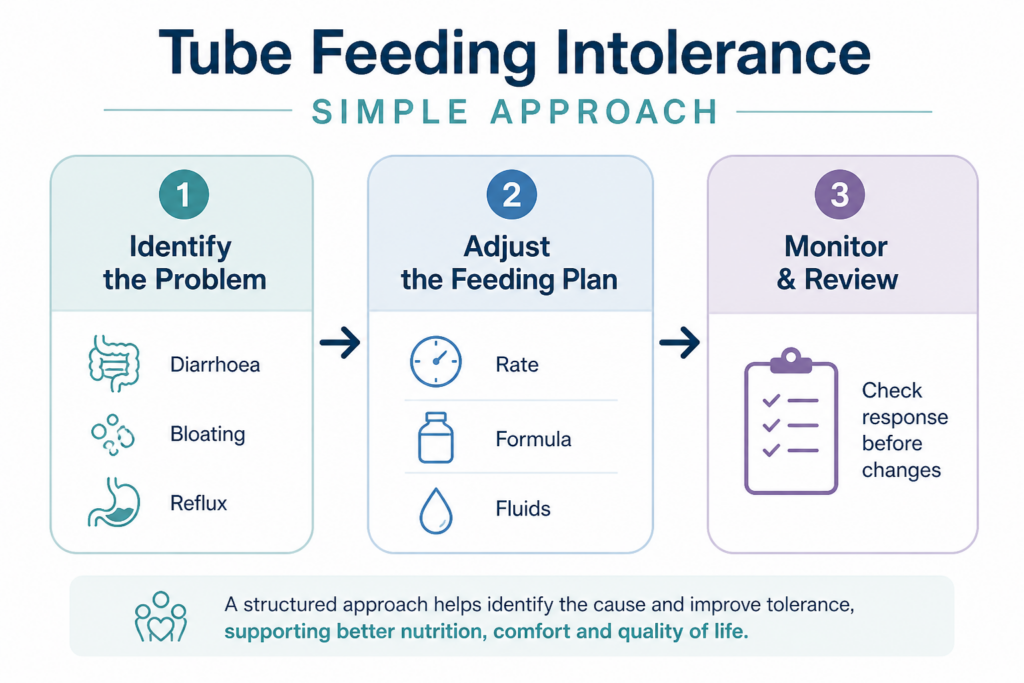
Step 1: Rule Out Non-Feed Causes
Before changing the feeding regimen, consider factors unrelated to the formula:
- Medications (e.g. antibiotics, sorbitol-containing liquids)
- Infection (e.g. gastroenteritis, C. difficile)
- Underlying gastrointestinal conditions
If these are contributing, changing the feed alone may not resolve symptoms.
Step 2: Review Feeding Regimen
Assess how the feed is being delivered:
- Feeding rate (is it too fast?)
- Volume per feed
- Method (bolus vs continuous feeding)
- Temperature of feed at adminstration
Slowing the rate or adjusting the schedule can significantly improve tolerance.
Step 3: Assess Formula Composition
Not all enteral formulas are tolerated equally.
Consider:
- Fibre content (type and amount)
- Energy density
- Osmolality
A formula change may improve symptoms, particularly if diarrhoea or bloating is persistent.
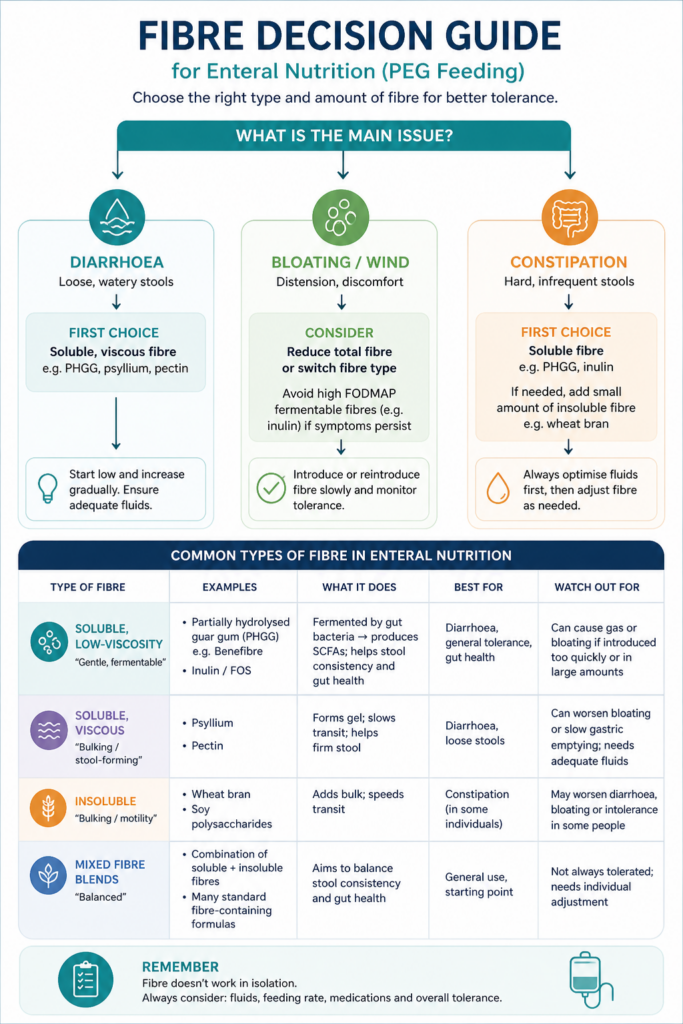
Step 4: Evaluate Fibre and Fluid Balance
Fibre and fluid need to be considered together.
- Low fibre may contribute to diarrhoea or poor stool consistency
- Excess or poorly tolerated fibre may worsen bloating
- Inadequate fluid can contribute to constipation or discomfort
Adjustments should be individualised and monitored.
Step 5: Monitor Response Before Further Changes
After making an adjustment:
- Monitor symptoms over several days
- Avoid changing multiple variables at once
- Document what has been trialled
This helps identify what is actually improving tolerance.
Why This Approach Matters
A structured approach reduces trial-and-error and supports more effective management of enteral nutrition.
For NDIS participants, this can mean:
- Improved comfort
- Better nutritional intake
- Reduced need for hospital intervention
If you’re supporting an NDIS participant experiencing ongoing tube feeding intolerance, our team provides PEG feeding and enteral nutrition support across Melbourne. To arrange support, you can complete our online referral form.
About the Author
Brian is a Melbourne-based Accredited Practising Dietitian supporting NDIS participants with PEG feeding and enteral nutrition. He works across community and residential aged care, managing complex nutrition needs. With over 10 years’ experience in nutrition, he brings a practical, outcome-focused approach to improving intake and tolerance.
